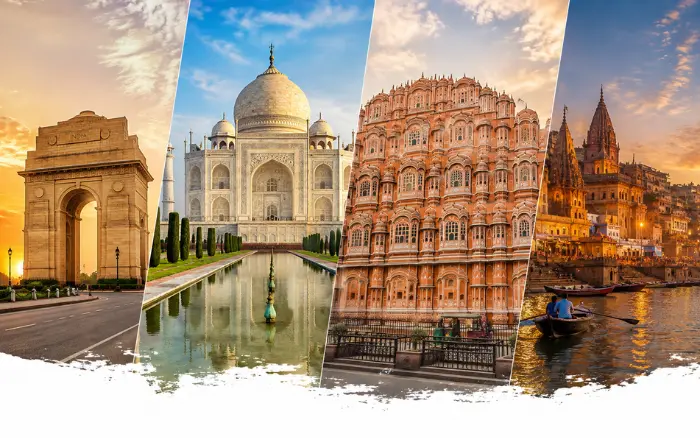
Planning a 10 Days North India Itinerary can feel complicated because North India has far more places to see than you can realistically cover in ten days. The smarter approach is to choose a route that combines major heritage sites, local culture, food and spiritual experiences without spending most of the trip travelling.
For a first trip, a Delhi–Agra–Jaipur–Varanasi route works particularly well. It combines Mughal history, Rajasthan’s royal architecture, India’s famous monuments and the spiritual atmosphere of the Ganges.
Quick Answer: What Is the Best 10 Days North India Itinerary?
The most practical route is Delhi → Agra → Jaipur → Varanasi → Delhi. Spend two days in Delhi, one day in Agra, two days in Jaipur, two days in Varanasi and use the remaining time for intercity travel and departure. This route covers four distinct travel experiences without trying to fit too many cities into one trip.
10-Day North India Itinerary at a Glance
| Day | Destination | Main Experiences |
| Day 1 | Delhi | Arrival, India Gate, Old Delhi |
| Day 2 | Delhi | Qutub Minar, Humayun’s Tomb, heritage |
| Day 3 | Agra | Taj Mahal, Agra Fort |
| Day 4 | Jaipur | Travel to Jaipur, local sightseeing |
| Day 5 | Jaipur | Amer Fort, City Palace, Hawa Mahal |
| Day 6 | Jaipur → Varanasi | Intercity travel |
| Day 7 | Varanasi | Ghats, Ganga Aarti |
| Day 8 | Varanasi | Sunrise boat ride, temples, Sarnath |
| Day 9 | Varanasi → Delhi | Return journey |
| Day 10 | Delhi | Departure |
Day 1–2: Explore Delhi
Start your 10 Days North India Itinerary in Delhi. The capital is the best introduction to the region because its attractions cover several centuries of Indian history.
On Day 1, keep the schedule relatively relaxed after arrival. Depending on your arrival time, explore India Gate, Connaught Place or Old Delhi.
Day 2 can focus on historical monuments. Visit Qutub Minar and Humayun’s Tomb, followed by other attractions depending on your interests. Qutub Minar is a UNESCO World Heritage Site and stands 72.5 metres high, while Humayun’s Tomb is another UNESCO-listed monument and an important example of Mughal garden-tomb architecture.
Travel tip: Do not overload Delhi with too many monuments. Traffic can make sightseeing slower than expected.
Day 3: Agra and the Taj Mahal
Leave Delhi for Agra and dedicate the day to the city’s Mughal heritage.
The Taj Mahal is the obvious highlight, but Agra Fort deserves time as well. The Taj Mahal officially opens 30 minutes before sunrise and closes 30 minutes before sunset, and it is closed on Fridays. Check the current visitor information before finalising your dates.
For photography and a more comfortable visit, early morning is generally a good choice. After the Taj Mahal, explore Agra Fort and, if time permits, other local heritage attractions.
Important planning tip: Avoid placing your Taj Mahal visit on Friday.
Day 4–5: Jaipur — The Pink City
Continue to Jaipur, the Rajasthan section of this 10 Days North India Itinerary.
Jaipur combines forts, palaces, bazaars and traditional architecture. On Day 4, keep sightseeing light after your journey and explore the old city or local markets.
Day 5 should focus on the major attractions. Visit Amer Fort, City Palace, Jantar Mantar and Hawa Mahal.
Rajasthan Tourism describes Amer Fort as a major attraction located about 11 km from central Jaipur. Jantar Mantar is a UNESCO World Heritage Site containing a collection of astronomical instruments, while Hawa Mahal is Jaipur’s distinctive five-storey landmark known for its numerous jharokhas.
Best approach: Start with Amer Fort in the morning and keep Hawa Mahal and the old-city attractions for later.
Day 6: Jaipur to Varanasi
This is the longest travel transition in the itinerary.
For a 10-day trip, choose the fastest practical transport option available for your dates rather than spending most of the day on the road. Flights can save valuable sightseeing time, while trains may suit travellers who prefer rail travel.
Keep Day 6 primarily for transportation and hotel check-in. Trying to add major sightseeing after a long journey can make the itinerary unnecessarily tiring.
Day 7–8: Experience Varanasi
Varanasi changes the character of the trip completely. After Delhi’s monuments, Agra’s Mughal heritage and Jaipur’s royal architecture, Varanasi introduces India’s living spiritual traditions.
On Day 7, explore the ghats and attend the evening Ganga Aarti at Dashashwamedh Ghat. Official tourism information identifies Dashashwamedh Ghat as one of the city’s key locations for the evening Aarti.
On Day 8, start early with a boat ride on the Ganges. Then explore the old city and important temples before visiting Sarnath if your schedule allows.
Sarnath is particularly significant because it is associated with Buddha’s first sermon and contains important Buddhist monuments, including the Dhamek Stupa.
How Much Does a 10-Day North India Trip Cost?
The cost depends heavily on hotel category, season, transport, group size and whether you use private transfers.
A useful planning structure is:
- Budget: economical hotels, public transport and selected paid attractions
- Mid-range: comfortable 3–4-star hotels, private transfers on key routes and organised sightseeing
- Luxury: premium hotels, private vehicle, higher-end experiences and upgraded transport
Instead of relying on one fixed figure, compare the complete package cost—including hotels, meals, transfers, sightseeing, flights or trains and monument tickets.
For Jaipur, even official Rajasthan Tourism Development Corporation sightseeing tariffs show that tour prices can exclude monument entrance fees and other charges, demonstrating why package inclusions should always be checked before comparing prices.
What Is the Best Time for This North India Itinerary?
For this Delhi–Agra–Jaipur–Varanasi route, October to March is generally the most comfortable period for sightseeing. Varanasi’s official tourism information also identifies October to March as a particularly pleasant period for exploring the ghats, walking through the old city and taking boat rides.
Winter mornings can be cold and foggy, especially around the northern plains, so carry layers even when daytime temperatures feel comfortable.
What Should You Pack for 10 Days in North India?
Keep your luggage practical rather than excessive.
Pack:
- Comfortable walking shoes
- Lightweight daytime clothes
- Warm layers for winter
- Sunglasses and sunscreen
- A reusable water bottle
- Basic medicines
- Power bank and travel adapters
- Modest clothing for religious sites
- Small daypack for sightseeing
A comfortable pair of shoes matters more than packing multiple outfits because several days involve walking through large heritage complexes and old-city areas.
Is 10 Days Enough for North India?
Yes—10 days are enough for a well-planned first-time North India trip, but not enough to cover the entire region.
The key is limiting the itinerary to four major destinations. Delhi, Agra, Jaipur and Varanasi provide a balanced combination of history, architecture, culture, food and spirituality without adding too many long transfers.
If you have more than 10 days, consider extending the trip rather than rushing through additional cities.
Final Takeaway
A well-planned 10 Days North India Itinerary does not need to cover every famous destination. The better strategy is to build a focused route around Delhi, Agra, Jaipur and Varanasi, then give each destination enough time to experience what makes it different.
For a customised trip, compare hotel categories, transport options, sightseeing inclusions and travel dates before booking. That approach gives you a more realistic budget and a smoother North India experience.
Ready to explore Delhi, Agra, Jaipur & Varanasi? Plan your 10 Days North India Itinerary with us today.
Call / WhatsApp: 9319002744
Website: The India Voyages
Frequently Asked Questions
Q1. What is the best route for a 10 Days North India Itinerary?
The most practical first-time route is Delhi → Agra → Jaipur → Varanasi → Delhi. It creates a logical combination of major heritage and cultural destinations while limiting unnecessary backtracking.
Q2. Is 10 days enough for Delhi, Agra, Jaipur and Varanasi?
Yes. Two days in Delhi, one in Agra, two in Jaipur and two in Varanasi provide enough time for the major highlights. The remaining days should be reserved for transfers and departure.
Q3. What is the best time for a 10-day North India trip?
October to March is generally the most comfortable period for this route. However, winter mornings can be cold or foggy, so travellers should plan sightseeing and transport with weather conditions in mind.
Q4. Should I visit the Taj Mahal in the morning?
Yes. Early morning can provide softer light and cooler conditions. Most importantly, remember that the Taj Mahal is closed on Fridays, so check the official schedule before fixing your Agra day.
Q5. Can I customise this 10 Days North India Itinerary?
Absolutely. You can add or remove sightseeing based on your interests. Travellers interested in history can spend more time in Delhi and Agra, while those looking for spirituality can give Varanasi an additional day. For a Rajasthan-focused trip, Jaipur can also be extended.