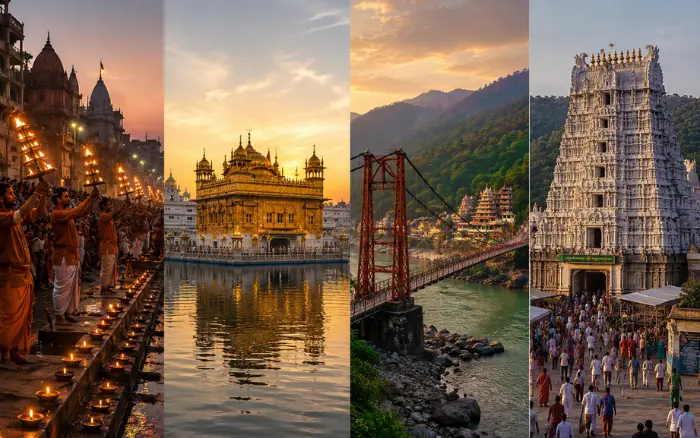
19% of Indian travelers say their next trip will be driven by faith, not leisure. That’s the highest share anywhere in Asia, ahead of Indonesia, Malaysia, Japan, and Thailand. Spiritual tourism in India isn’t a side category anymore. It’s becoming the main reason millions travel.
And it’s not just older generations doing the traveling. Young travelers now make up more than half of pilgrimage trips on several major routes, treating these journeys as much about self-discovery as religious duty.
Here’s where the spiritual circuit actually takes you.
Varanasi: where it all begins for most travelers
If spiritual tourism in India has a capital, it’s Varanasi. The city sits on the banks of the Ganges and has drawn pilgrims for over 3,000 years.
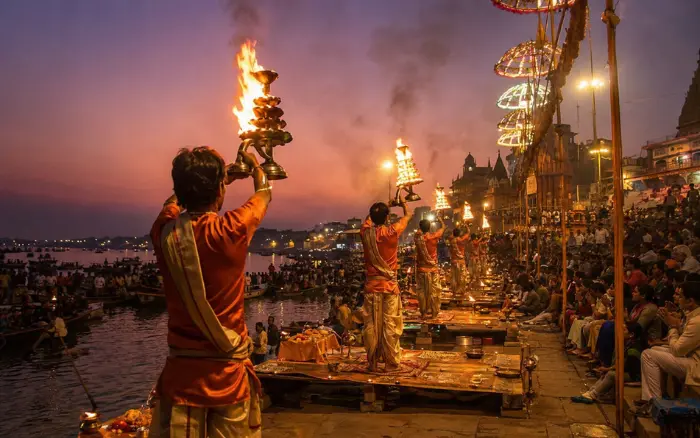
The Ganga Aarti at Dashashwamedh Ghat happens every evening, priests performing synchronized fire rituals as the sun sets over the river. Watching it from a boat on the water hits differently than watching from the steps. Over 5 lakh devotees visited the Kashi Vishwanath Temple in a single day during New Year 2026, which tells you how much this city pulls people in, even outside major festival dates.
Plan at least 2 full days here. One evening is never enough.
Rishikesh: spirituality meets the Himalayas
Rishikesh built its reputation on yoga and meditation, but it’s older than that reputation suggests. The Ganges flows through here too, just colder and clearer this far upstream, fresh from the mountains rather than the plains.
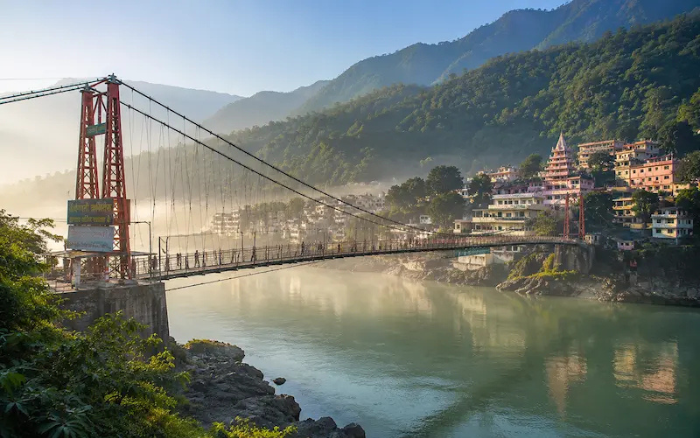
Ram Jhula and Lakshman Jhula, the suspension bridges crossing the river, connect ashrams, temples, and yoga schools on both banks. The evening aarti here is quieter than Varanasi’s, smaller crowds, more stillness. If Varanasi feels intense, Rishikesh feels like a slower exhale.
Amritsar: the Golden Temple experience
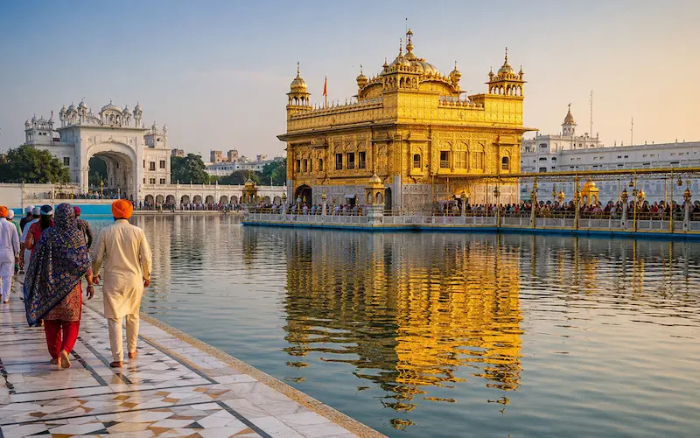
The Golden Temple in Amritsar is Sikhism’s holiest site, and it runs one of the largest free community kitchens in the world, feeding over 100,000 people daily regardless of religion, caste, or background.
What strikes most first-time visitors isn’t just the temple’s gold-plated dome reflecting in the Amrit Sarovar (sacred pool). It’s the langar, the communal meal, where everyone sits on the floor together and eats the same food. There’s no hierarchy in that room. That’s the point.
Ayodhya: a site that’s grown fast
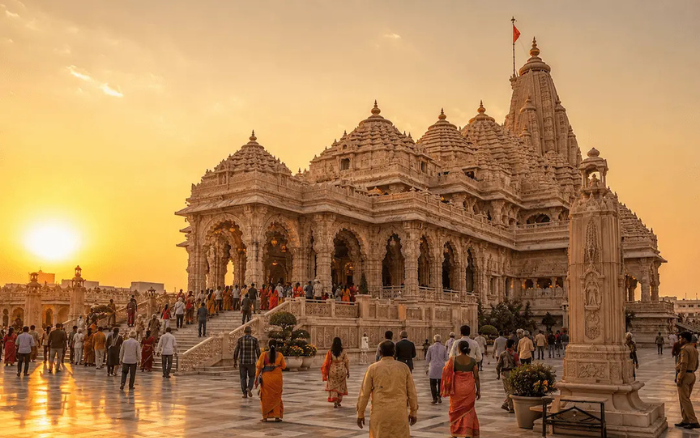
The spiritual significance of Ayodhya has expanded dramatically with the construction of the Ram Mandir, and pilgrim numbers have climbed sharply since. If you visited years ago, the experience now is noticeably different, larger crowds, more infrastructure, more energy.
For travelers tracing Hindu pilgrimage sites, Ayodhya now sits alongside Varanasi as a primary stop on a North India spiritual circuit.
Tirupati: the south’s spiritual powerhouse
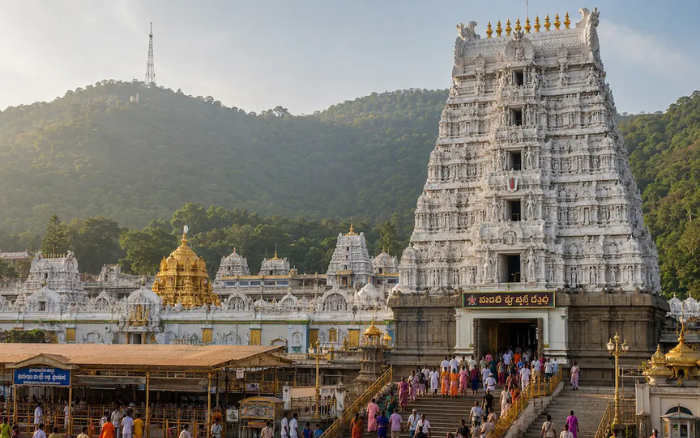
The Tirumala Sri Venkateswara Swamy Temple in Tirupati draws some of the highest pilgrim volumes anywhere in India. Routes from Bengaluru and Hyderabad see heavy traffic from young devotees specifically, many making the trip as much for cultural connection as religious obligation.
If your circuit includes South India, Tirupati is the equivalent of what Varanasi represents in the north.
Pushkar and the Mathura-Vrindavan circuit
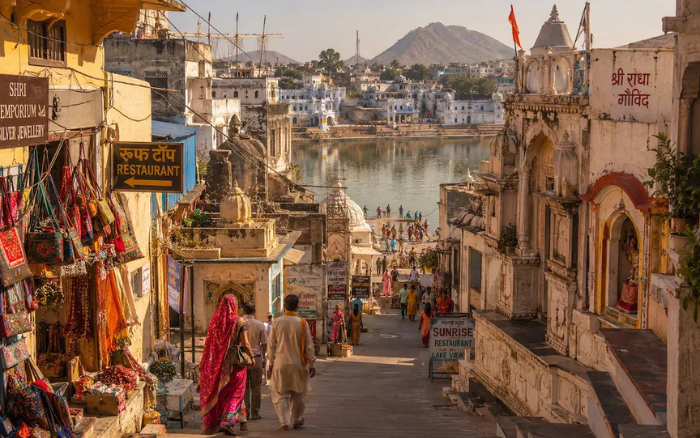
Smaller but worth knowing about: Pushkar, Vrindavan, and Mathura have all seen sharp increases in traveler interest, with Pushkar recording a 195% jump and Vrindavan and Mathura following at 126% and 109%. These towns center around Krishna devotion and offer a more intimate alternative to the bigger pilgrimage cities, fewer crowds, more narrow lanes and small temples to wander through.
How to plan a spiritual circuit
Most spiritual journeys in India follow a regional logic rather than randomly hopping between cities. A North India circuit (Delhi, Mathura, Vrindavan, Varanasi, Ayodhya) works well over 7-10 days. A Punjab-focused trip (Amritsar plus the Golden Triangle) fits into 5-7 days. South India’s Tirupati circuit pairs naturally with a Chennai or Bengaluru arrival.
Timing matters too. Major festivals (Holi, Diwali, Kumbh Mela years) bring extraordinary energy but also extraordinary crowds. If you want the spiritual weight without the crush of people, travel a few weeks before or after the peak festival dates.
Begin Your Spiritual Journey Through India Today! Click here:
Please feel free to contact us at any time for any other travel information, tour bookings, tickets, transportation, or hotel bookings in India. Just call or WhatsApp us at : +91 93190 02744
For more tour packages, visit our website: The India Voyage
FAQ
Q1. What is the best city in India for spiritual tourism?
Varanasi is considered the spiritual heart of India, with continuous pilgrimage traditions dating back over 3,000 years. For a different but equally significant experience, the Golden Temple in Amritsar and Tirupati in the south are major alternatives.
Q2. Is spiritual tourism in India growing?
Yes, significantly. Agoda’s 2026 Travel Outlook Report found that 19% of Indian travelers plan trips motivated by faith this year, the highest share in Asia. The faith-based tourism market is projected to grow at 15.5% annually through 2033.
Q3. How many days do you need for a spiritual tour of North India?
A circuit covering Delhi, Mathura, Vrindavan, Varanasi, and Ayodhya typically takes 7-10 days. Shorter trips can focus on just Varanasi and Ayodhya in 4-5 days.
Q4. What should I know before visiting the Golden Temple in Amritsar?
Cover your head before entering (scarves are provided at the entrance), remove your shoes, and consider eating at the langar, the temple’s free community kitchen, which welcomes visitors of all backgrounds.
Q5. When is the best time to visit Varanasi for spiritual tourism?
October to March offers the most comfortable weather. For a major spiritual event, Dev Deepavali in November sees the city’s ghats lit with over a million lamps, one of India’s most striking religious sights.