Every evening, seven priests stand at the edge of the Ganges and perform a fire ritual that has run without interruption for decades. No cancellations during floods. No breaks during pandemics. The Ganga Aarti in Varanasi happens every single day, and it pulls in thousands of people who’ve traveled from across the world just to be there for 45 minutes.
Here’s exactly when it happens, where to stand, and how to not miss it.
When does the Ganga Aarti start?
The ceremony at Dashashwamedh Ghat starts at 6:45 PM from April to September and 5:45 PM from October to March. The timing shifts with sunset throughout the year, so it’s worth checking the date of your visit specifically rather than memorizing a fixed time.
The ceremony lasts approximately 45 minutes and has never been cancelled.
Arrive 40-45 minutes early if you want a spot on the lower steps. Any later and you’re watching over people’s heads.
Where to watch: Dashashwamedh Ghat
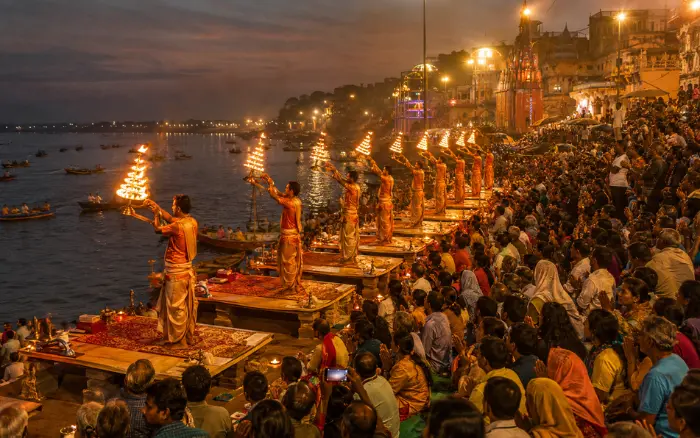
Dashashwamedh Ghat is the main event. Seven young Brahmin priests perform the aarti simultaneously, each at their own platform, moving large brass lamps in clockwise circles toward the river while chanting Sanskrit mantras.
The sequence follows a fixed order: conch shells first, then incense, then the layered brass lamps. The whole thing is choreographed. When all 7 priests move in sync, the crowd goes quiet.
Paid front chairs cost ₹200-₹350 and often sell out 30-45 minutes before the ceremony. The ghat steps are free.
Dashashwamedh vs Assi Ghat
Most visitors only know about Dashashwamedh. But Assi Ghat at the southern end of the city runs its own evening aarti with 3-5 priests and a much smaller crowd. If you’ve already seen Dashashwamedh or want a quieter experience, Assi Ghat is the better choice.
Assi Ghat also runs a morning aarti called Subah-e-Banaras at around 5:00 AM, an intimate ceremony where the crowd is mostly locals doing their daily prayers. Worth waking up for if you’re a light sleeper anyway.
Boat vs ghat: where you should actually watch from
This is the decision most first-timers get wrong.
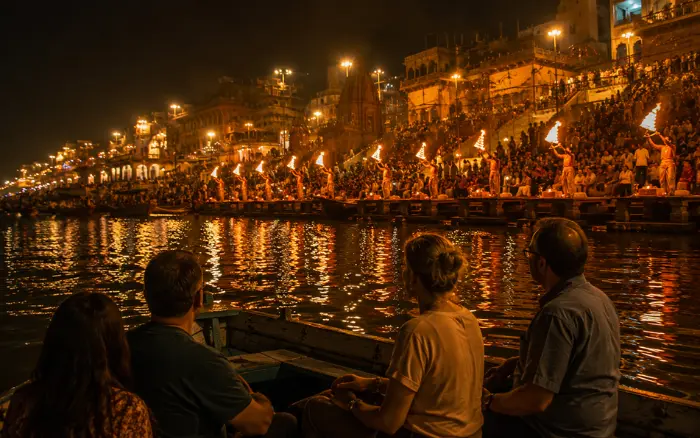
Watching from a boat on the Ganges gives you an unobstructed view of all 7 priests simultaneously. The river reflects the fire. The sound carries across the water. And you’re never in a crowd.
From the ghat steps, you see the ceremony up close but fight for sightlines in a crowd that can hit 700+ people per 100 metres at peak. Both experiences are valid. The ghat puts you in the energy of the crowd. The boat gives you the full picture.
Shared boat rides cost ₹200-₹300 per person. Private motorboats run ₹1,800-₹4,500. Book a day in advance for regular dates, and 5-7 days ahead for Dev Deepavali or festival nights.
Dev Deepavali: the aarti at its biggest
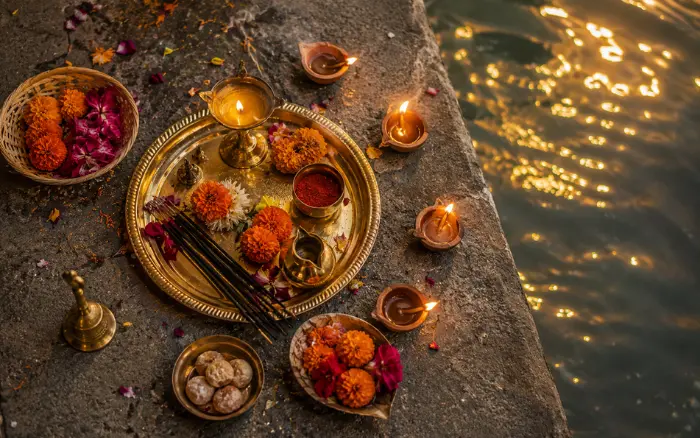
The regular aarti is spectacular. Dev Deepavali, which falls 15 days after Diwali (November 24, 2026), is something else entirely.
On Dev Deepavali, over a million earthen lamps are lit across all 84 ghats simultaneously, and the special aarti runs from 5:15 PM to 7:50 PM, over 2.5 hours compared to the regular 45 minutes.
If your travel dates have any flexibility and you’re visiting in November, plan around this date. The regular Varanasi aarti is memorable. Dev Deepavali is genuinely a once-in-a-lifetime experience.
Practical tips before you go
After the ceremony ends, head to the ghat to float a diya — small leaf boats with oil lamps and flowers are sold right at the ghat. A boat ride along the lit ghats after the aarti, past Manikarnika cremation ghat and back, gives you a perspective on Varanasi that no daytime visit can match.
Ignore touts selling ₹600+ “VIP” seats. The paid chairs at the front legitimately cost ₹200-₹350 and are sold directly at the ghat.
At The India Voyages, we include the Ganga Aarti as part of our Varanasi tours, with a private boat booked in advance so you get the river view without the last-minute scramble. Get in touch to add Varanasi to your India itinerary.
You Might Also Like
Experience the Spiritual Heart of Varanasi Today! Click here:
Please feel free to contact us at any time for any other travel information, tour bookings, tickets, transportation, or hotel bookings in India. Just call or WhatsApp us at : +91 93190 02744
For more tour packages, visit our website: The India Voyages
FAQ
1. What time is the Ganga Aarti in Varanasi?
The Ganga Aarti at Dashashwamedh Ghat starts at 6:45 PM from April to September and 5:45 PM from October to March. The ceremony lasts approximately 45 minutes.
2. Is the Ganga Aarti free to watch?
Yes, watching from the ghat steps is completely free. Front chairs near the ceremony cost ₹200-₹350. Boat rides to watch from the river cost ₹200-₹300 per person for shared boats.
3. How early should I arrive for the Ganga Aarti?
Arrive at least 40-45 minutes before the start time to get a good position on the steps. If you’re watching from a boat, 20 minutes before is enough.
4. What is Dev Deepavali and how is it different from the regular Ganga Aarti?
Dev Deepavali falls 15 days after Diwali (November 24 in 2026). Over a million diyas are lit across all 84 ghats, and the special aarti runs for over 2.5 hours. It’s significantly larger than the regular evening ceremony.
5. Is there a morning Ganga Aarti in Varanasi?
Yes. Assi Ghat runs a morning aarti called Subah-e-Banaras at around 5:00 AM daily. It’s smaller and more intimate than the Dashashwamedh evening ceremony, with mostly local devotees attending.