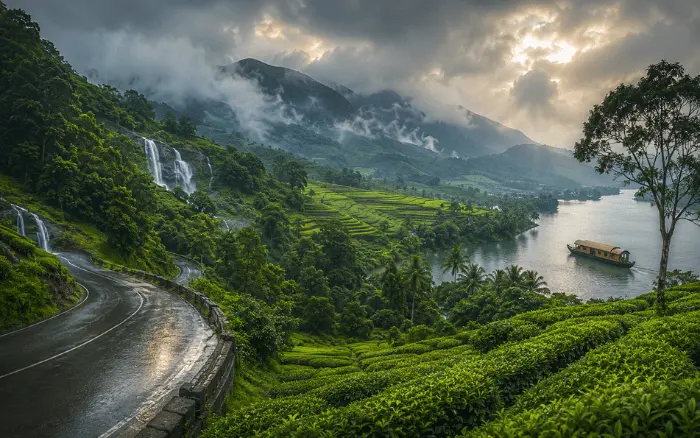
India’s monsoon season transforms the country into a breathtaking paradise of lush green hills, mist-covered mountains, overflowing waterfalls, sparkling lakes, and vibrant forests. While many travelers prefer winter vacations, Monsoon Travel in India offers a completely different experience—one that’s peaceful, scenic, and surprisingly affordable.
From sipping fresh tea in the rolling plantations of Munnar to cruising through the tranquil backwaters of Alleppey or trekking across the colorful Valley of Flowers, the rainy season reveals a magical side of India that many visitors never get to see. Hotels and flights are often available at discounted prices, tourist attractions are less crowded, and the landscapes are at their most beautiful.
Whether you’re planning a romantic honeymoon, a family holiday, a solo adventure, or a weekend road trip, this guide covers everything you need to know about Monsoon Travel in India, including the best destinations, ideal travel months, safety tips, travel budgets, and practical advice for a memorable rainy-season vacation.
What is Monsoon Travel in India?
Monsoon Travel in India refers to exploring destinations across the country during the annual southwest monsoon season, which generally lasts from June to September. Instead of avoiding the rain, many travelers specifically choose this time of year to experience India’s natural beauty at its peak.
The rainy season transforms dry landscapes into lush green valleys, fills lakes and rivers, revives waterfalls, and creates misty mountain views that are perfect for sightseeing and photography. Many destinations also become quieter, allowing visitors to enjoy a more relaxed travel experience.
While some areas receive heavy rainfall, many hill stations, backwater destinations, and heritage cities become even more attractive during the monsoon, making this one of the best times for nature lovers and photographers.
Why Choose Monsoon Travel in India?
Although winter is India’s busiest tourist season, the monsoon has its own unique charm.
Here are some of the biggest advantages:
- Lush green landscapes across mountains, forests, and countryside
- Spectacular waterfalls flowing at full strength
- Pleasant weather in many hill stations
- Lower hotel and flight prices
- Fewer tourist crowds
- Excellent opportunities for nature and landscape photography
- Fresh mountain air and peaceful surroundings
The rainy season is also ideal for exploring tea plantations, coffee estates, lakes, rivers, wildlife reserves, and scenic countryside roads.
For travelers seeking a quieter and more affordable vacation, Monsoon Travel in India offers incredible value.
Best Time for Monsoon Travel in India
India’s Southwest Monsoon typically arrives in Kerala during early June before gradually moving across western, central, and northern India.
June
The rainy season begins in southern India, bringing fresh greenery to Kerala, Karnataka, and parts of Tamil Nadu.
July
Heavy rainfall spreads across western and central India. Hill stations become cooler, waterfalls begin flowing at full strength, and forests turn lush green.
August
Often considered the most beautiful month for Monsoon Travel in India, August offers vibrant landscapes, blooming flowers, mist-covered hills, and full rivers.
September
Rainfall gradually decreases, making road trips and sightseeing easier while the countryside remains beautifully green.
Travel Tip: Rainfall patterns vary every year. Always check the latest weather forecast before finalizing your travel plans.
Who Should Choose Monsoon Travel in India?
A monsoon holiday is ideal for travelers who enjoy nature, peaceful surroundings, and scenic landscapes.
It is especially recommended for:
- Couples looking for romantic getaways
- Families seeking relaxing vacations
- Solo travelers
- Nature lovers
- Wildlife enthusiasts
- Adventure seekers
- Photography lovers
If you enjoy misty mountains, waterfalls, fresh air, and fewer crowds, you’ll love traveling during India’s rainy season.
Top Monsoon Destinations in India
1. Munnar, Kerala – Best for Tea Gardens and Misty Hills
Among the most popular monsoon destinations in India, Munnar offers endless tea plantations, cool weather, rolling hills, and breathtaking viewpoints.
Must-visit attractions include:
- Eravikulam National Park
- Tea Museum
- Mattupetty Dam
- Echo Point
- Attukad Waterfalls
Average Temperature: 18°C–24°C
Munnar is also one of India’s top honeymoon destinations during the monsoon.
2. Coorg, Karnataka – Best for Coffee Plantations
Popularly known as the “Scotland of India,” Coorg becomes even more beautiful after the arrival of the monsoon.
Visitors can explore:
- Abbey Falls
- Raja’s Seat
- Dubare Elephant Camp
- Talacauvery
- Coffee plantations
Plantation stays and scenic drives through the Western Ghats make Coorg a favorite rainy-season getaway.
3. Valley of Flowers, Uttarakhand – Best for Trekking
A UNESCO World Heritage Site, the Valley of Flowers National Park is open only during the monsoon months and reaches peak bloom between mid-July and August.
Highlights include:
- Colorful alpine flowers
- Himalayan trekking trails
- Snow-capped mountain views
- Rare Himalayan flora
This destination is perfect for trekkers, photographers, and nature lovers.
4. Goa – Best for Beaches, Waterfalls and Countryside
Goa during the monsoon is peaceful, green, and surprisingly refreshing.
Popular attractions include:
- Dudhsagar Falls
- Spice plantations
- Fontainhas Latin Quarter
- Mandovi River cruises
- Scenic Portuguese villages
Hotels are often significantly cheaper than during the winter season.
Safety Tip: Swimming in the sea is generally discouraged during rough monsoon conditions. Always follow local beach safety advisories.
5. Udaipur, Rajasthan – Best for Lakes and Heritage
Although Rajasthan is famous for its deserts, Udaipur becomes surprisingly refreshing during the monsoon. Rain fills the city’s beautiful lakes, the Aravalli Hills turn green, and historic palaces look even more stunning against cloudy skies.
Top attractions include:
- Lake Pichola
- City Palace
- Sajjangarh (Monsoon Palace)
- Fateh Sagar Lake
- Jag Mandir
One of the highlights is watching the sunset from Monsoon Palace, which offers breathtaking panoramic views after rainfall.
6. Mahabaleshwar, Maharashtra – Best for Waterfalls
Mahabaleshwar is one of Maharashtra’s most popular hill stations during the rainy season. Dense fog, overflowing waterfalls, and scenic viewpoints attract thousands of visitors every year.
Top places to visit:
- Arthur’s Seat
- Lingmala Waterfall
- Venna Lake
- Wilson Point
- Mapro Garden
The drive through the Western Ghats is itself one of the best monsoon experiences in India.
7. Alleppey, Kerala – Best for Backwater Cruises
Known as the “Venice of the East,” Alleppey offers one of the most relaxing monsoon holidays in India.
A traditional houseboat cruise through Kerala’s backwaters lets you enjoy:
- Peaceful canals
- Coconut groves
- Village life
- Rain-soaked landscapes
- Authentic Kerala cuisine
Many travelers also combine Alleppey with nearby Kumarakom for a longer backwater vacation.
8. Lonavala & Khandala, Maharashtra – Best Weekend Getaway
Located between Mumbai and Pune, Lonavala and Khandala become incredibly popular during the monsoon.
Top attractions include:
- Tiger Point
- Bhushi Dam
- Rajmachi Fort
- Karla Caves
- Duke’s Nose Viewpoint
For a quieter experience, consider visiting on weekdays.
Can You Visit Delhi, Agra & Jaipur During the Monsoon?
While hill stations and backwater destinations are the stars of the rainy season, many travelers also choose a Golden Triangle Tour during the monsoon. Although Delhi, Agra, and Jaipur are not traditional monsoon destinations, occasional rain makes their historic monuments cleaner, greener, and less crowded.
Delhi
The capital city becomes greener after rainfall, making sightseeing more enjoyable.
Top attractions:
- India Gate
- Humayun’s Tomb
- Qutub Minar
- Lodhi Garden
- Rashtrapati Bhavan (drive past)
Agra
The Taj Mahal looks particularly beautiful after rain as its white marble shines against dark monsoon clouds.
Must-visit attractions:
- Taj Mahal (Closed every Friday)
- Agra Fort
- Mehtab Bagh
- Itmad-ud-Daulah (Baby Taj)
Jaipur
Known as the Pink City, Jaipur becomes cooler during the rainy season, and the surrounding Aravalli Hills turn lush green.
Top attractions:
- Amber Fort
- Hawa Mahal
- City Palace
- Jal Mahal
- Nahargarh Fort
- Sajjangarh (Monsoon Palace)
If you enjoy heritage tourism and photography, a Golden Triangle Tour during the monsoon can be a rewarding experience.
Best Activities During the Monsoon
The rainy season offers many unique travel experiences.
Some of the best activities include:
- Trekking in the Western Ghats
- Visiting waterfalls
- Tea plantation tours
- Coffee estate stays
- Houseboat cruises
- Nature photography
- Heritage walks
- Wildlife safaris (only in parks that remain open during the monsoon)
- Local food tours
Always check park opening schedules and weather forecasts before planning outdoor activities.
Travel Safety During the Monsoon
Traveling during the rainy season is enjoyable with proper preparation.
Before your trip:
- Check weather forecasts regularly.
- Follow local government travel advisories.
- Confirm road conditions.
- Avoid flooded roads and rivers.
- Monitor landslide warnings in mountain regions.
- Carry emergency contact numbers.
- Purchase travel insurance for longer trips if possible.
For reliable weather updates, check the India Meteorological Department (IMD) and your destination’s official tourism website.
Monsoon Travel Tips
Packing wisely will make your trip much more comfortable.
Carry:
- Waterproof rain jacket
- Umbrella
- Quick-dry clothing
- Waterproof phone pouch
- Comfortable non-slip shoes
- Power bank
- Basic medicines
- Extra plastic bags for electronics
Allow additional travel time, as heavy rainfall may delay road and rail transport.
Places to Avoid During Heavy Rainfall
Some destinations may experience landslides or transport disruptions during periods of intense rainfall.
Exercise extra caution when visiting:
- Himachal Pradesh
- Uttarakhand
- Sikkim
- Arunachal Pradesh
Always check official weather advisories before traveling to remote mountain regions.
Estimated Budget for Monsoon Travel in India
| Travel Style | Estimated Cost (Per Person) |
| Budget | ₹12,000–18,000 |
| Mid-range | ₹20,000–35,000 |
| Luxury | ₹45,000+ |
One of the biggest advantages of Monsoon Travel in India is that hotels and flights often offer attractive off-season discounts.
Best Monsoon Destinations in India at a Glance
| Destination | Best For |
| Munnar | Tea Gardens & Misty Hills |
| Coorg | Coffee Plantations |
| Valley of Flowers | Trekking & Wildflowers |
| Goa | Waterfalls & Countryside |
| Udaipur | Lakes & Heritage |
| Mahabaleshwar | Waterfalls & Viewpoints |
| Alleppey | Houseboat Cruises |
| Lonavala | Weekend Road Trips |
Official Travel Resources
For the latest travel and weather updates, refer to:
- India Meteorological Department (IMD) – Weather forecasts and rainfall updates.
- Incredible India – Official tourism information, destination guides, and travel advisories.
Final Thoughts
Monsoon Travel in India offers a completely different perspective on the country’s natural beauty. From mist-covered tea plantations and blooming flower valleys to peaceful backwaters, historic cities, and spectacular waterfalls, the rainy season creates unforgettable travel experiences.
Whether you choose the serene backwaters of Alleppey, the lush hills of Munnar, the colorful Valley of Flowers, or even a Golden Triangle Tour through Delhi, Agra, and Jaipur, the monsoon reveals a fresh and vibrant side of India.
With proper planning, weather awareness, and the right travel gear, your rainy-season holiday can become one of the most memorable journeys you’ll ever take.
Discover the Beauty of India During the Monsoon Click here:
Please feel free to contact us at any time for any other travel information, tour bookings, tickets, transportation, or hotel bookings in India. Just call or WhatsApp us at : +91 93190 02744
For more tour packages, visit our website: The India Voyage
FAQs
Q1. What is the best time for Monsoon Travel in India?
The ideal time is from June to September, with July and August offering lush landscapes, pleasant weather, and spectacular waterfalls.
Q2. Which are the best monsoon destinations in India?
Some of the top destinations include Munnar, Coorg, Valley of Flowers, Goa, Udaipur, Mahabaleshwar, Alleppey, and Lonavala.
Q3. Is it safe to travel in India during the monsoon?
Yes. Monitor weather forecasts, follow government advisories, avoid flood- or landslide-prone areas during heavy rainfall, and plan transportation accordingly.
Q4. Can I visit Delhi, Agra, and Jaipur during the monsoon?
Yes. Although they are not traditional monsoon destinations, light rainfall makes iconic attractions like the Taj Mahal, Amber Fort, and India Gate greener, cleaner, and less crowded than during peak tourist season.
Q5. What should I pack for a monsoon trip in India?
Carry a waterproof jacket, umbrella, quick-dry clothes, comfortable non-slip footwear, waterproof bags for electronics, a power bank, and essential medicines for a safe and comfortable journey.